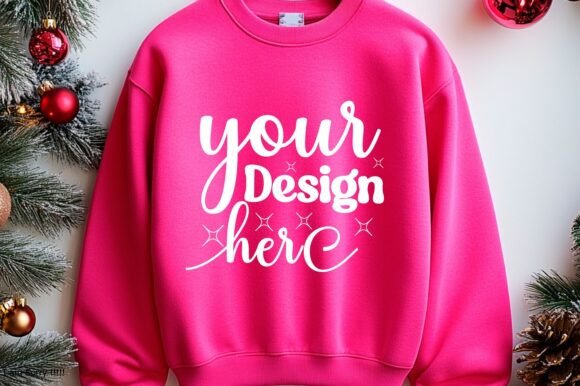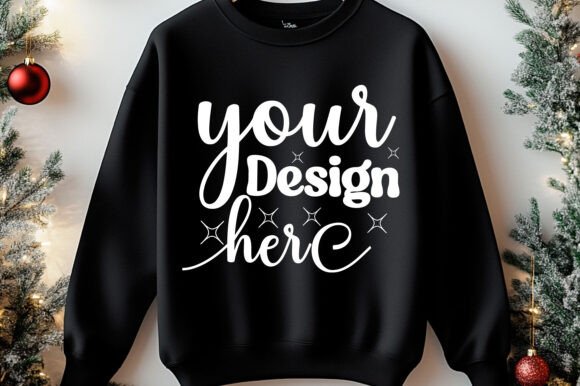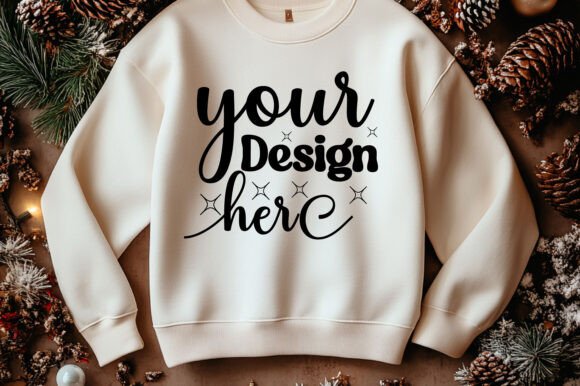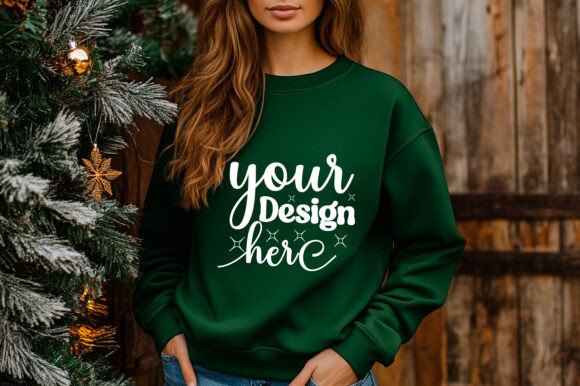
Reviewing the Christmas Women Sweatshirt Mockup 88
As a designer who has spent years staring at screens and threading needles, I have learned that the gap between a digital file and a finished handmade product is where most projects succeed or fail. When I first opened the Christmas Women Sweatshirt Mockup 88, my immediate reaction was not just about the aesthetic appeal, but about its practical utility for real-world embroidery project planning. This is not merely a pretty picture; it is a critical tool for visualizing how your machine embroidery design will sit on fabric before you waste a single spool of thread.
First Impressions and Visual Mood
The initial mood created by this mockup is warm, inviting, and distinctly seasonal without being overly cluttered. The layout focuses on the garment’s drape and texture, which is essential for anyone selling custom apparel. For embroidery designers, seeing the fabric folds helps anticipate how light will hit the stitches. If you are working with a satin stitch border or a dense fill stitch area, understanding these shadows allows you to predict where highlights might get lost or where contrast needs boosting.
The visual personality of the Gildan 18000 base used in this graphic suggests durability and comfort. This tells me immediately that the final finished product is likely intended for casual wear, holiday gatherings, or cozy winter days. It does not scream high-fashion runway; instead, it speaks to the heart of the Etsy seller and the small shop product creator who values relatability and warmth.
Real-World Application Scenarios
Let us consider a realistic scenario. Imagine you are preparing a batch of personalized gifts for a boutique client. They want a set of matching family sweatshirt embroidery pieces. Using the Christmas Women Sweatshirt Mockup 88, you can place your digital embroidery file onto the chest or sleeve area to check proportion. Does the design look too small against the broad shoulder line? Is the text legible from a distance?
This mockup excels when evaluating holiday embroidery themes. Whether you are designing a simple snowflake, a complex nativity scene, or playful lettering, the neutral background of the mockup ensures your thread colors pop. It is equally useful for tote bag design previews if you adapt the perspective, though its primary strength lies in apparel. For craft business owners, this level of presentation builds customer trust. A buyer is more likely to click "add to cart" when they can visualize the item clearly rather than guessing how a flat vector file translates to a 3D object.
Technical Considerations for Stitching
While the mockup looks gorgeous, we must address the technical realities of stitching on this type of garment. The Gildan 18000 is a heavy blend, which is excellent for hiding minor imperfections, but it presents challenges for certain embroidery file types. If your design relies heavily on tiny details or fine running stitch outlines, you must ensure your stitch density is appropriate. Too dense, and the fabric may pucker; too sparse, and the backing might show through.
When using this mockup to plan your work, pay attention to curved surfaces. If you are adapting the design for a cap or a fitted sleeve, remember that the flat preview in Product Mockups and Graphics categories often idealizes the surface. In reality, stitching on a curved seam requires careful hooping and possibly a cut-away stabilizer to maintain shape after washing. Always test your design on scrap fabric of similar weight before committing to the final garment.
Where to Use Caution
There are specific situations where relying solely on a mockup can be misleading. For instance, if you are working with dark fabric, the screen brightness can distort how your thread colors will actually appear. A vibrant red might look muddy on black fleece if the contrast is not high enough. I recommend testing your design in black and white modes within your software to check value contrast independently of hue.
Additionally, be cautious with very small hoop sizes. If your design includes intricate corners or tiny lettering, ensure that the scale shown in the mockup matches your actual hoop size capabilities. A design that looks crisp on a large sweatshirt chest may become a tangled mess if shrunk down for a baby onesie or an embroidered patch. Always verify the minimum recommended dimensions for your specific applique design or standard stitch pattern.
Enhancing Brand Consistency and Value
For commercial embroidery professionals, consistency is key. Using the same high-quality mockup style across your design assets creates a cohesive brand identity. When customers see the Christmas Women Sweatshirt Mockup 88 in your listings, they begin to associate that level of professionalism with your work. This enhances the perceived value of your personalized gift offerings.
Moreover, this tool aids in decision-making for printable mockup use in digital marketing. You can create variations quickly, testing different colorways without producing physical samples for every option. This efficiency is crucial for digital product sellers who need to keep their inventory fresh and relevant during the hectic holiday season.
Practical Designer Notes
- Test on Scrap: Always run a test stitch on similar fabric to check tension and registration.
- Check Contrast: Ensure your thread colors stand out against the garment color, especially for detailed areas.
- Verify Licensing: Before selling items made from designs previewed here, confirm the license terms for both the mockup and the embroidery files.
- Stabilizer Choice: Match your stabilizer to the fabric weight. Heavy sweatshirts often benefit from tear-away or cut-away options depending on the design density.
- Scale Appropriately: Do not assume the mockup scale is 1:1. Measure your actual garment and adjust your design size accordingly.
In conclusion, the Christmas Women Sweatshirt Mockup 88 is a valuable asset for any serious embroidery designer. It bridges the gap between digital creativity and tactile reality, helping you make informed decisions that lead to higher quality handmade product outcomes. By combining this visual tool with rigorous technical testing, you can elevate your craft and deliver products that truly resonate with your customers.